Het frame is toen in de lak gezet en vervolgens zijn de verschillende
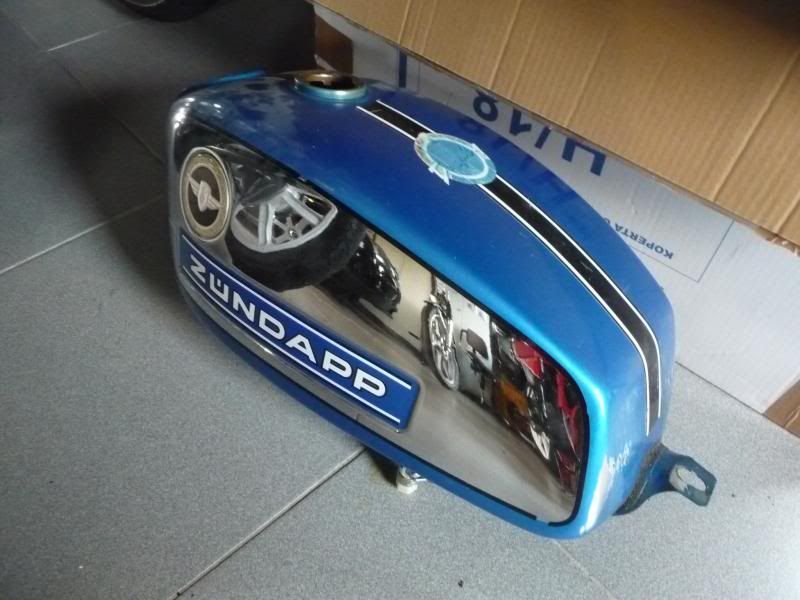
Zündapp was a significant German motorcycle manufacturer started in 1917 in Nuremberg by simply Fritz Neumeyer, together with the Friedrich Krupp AG plus the machine tool manufacturer Thiel under the name "Zünder- und Apparatebau G. m. b. H. " as a maker of detonators (Zünder- und Apparatebau is German for Igniter as well as Apparatus). In 1919, as the demand pertaining to weapons parts declined immediately after WWI, Neumeyer became the sole proprietor with the company, and two years later he diversified in to the construction of motorcycles.Following WWII, Zündapp expanded into the microcar, moped and Scooter (motorbike) markets. The company collapsed inside 1984.Zuendap. biz markets markets bike and electric bicycles while using the Zundapp name and emblem. while Zuendapp.com markets "enduro-sport" motorcycles under the Zundapp brand.

Het kratje met nog te reinigen onderdelen.
Het kratje met nog te reinigen onderdelen.
The very first Zündapp motorcycle was this model Z22 in 1921. This was the Motorrad für Jedermann ("motorcycle for everyone"), a simple, reliable design that was manufactured in large series. Zündapp's history of large motorcycles began in 1933 while using the K-series. The "K" refers to any type of drivetrain that these designs used, Kardanantrieb, meaning enclosed driveshaft along with two universal joints. Zündapp introduced the enclosed crankcase (then a novelty). The series encompassed models from 200 to 300 cc displacement and was a significant success, increasing Zündapp's market write about in Germany from 5% throughout 1931 to 18% with 1937.The Zündapp KS600, first released in 1938, had a 28 horsepower (21 kW) flat in a trench opposed twin cylinder generator with overhead valves displacing 597 cc (36. 4 cu in). The KS600 was often as well as a Steib sidecar, the BW38 (Beiwagen 1938). The BW38, fitted with the B1 (Boot no. 1) sidecar system was produced between 1938 along with 1941 and supplied exclusively towards the Wehrmacht. While the KS600 was discontinued and ultimately replaced by the purpose-built KS750, its motor was to be the only remnant to reside beyond the destruction involving war. When Zündapp returned to motorcycle production from the late 1940s, it chose to recycling the KS600's motor in order to power the KS601 using few modifications.The Zündapp K800 got unit construction, flat-four engines with the whole length drive (a page layout adopted by Honda for your Gold Wing in 1974) and were really the only 4-cylinder machines used with the German armed forces inside WWII.

From 1931 Ferdinand Porsche in addition to Zündapp developed the prototype Vehicle für Jedermann ("car pertaining to everyone"), which was the very first time that the name Volkswagen has been used. Porsche preferred the 4-cylinder flat engine, but Zündapp used some sort of water-cooled 5-cylinder radial serps. In 1932 three prototypes were being running. All three cars were lost throughout the war, the last in a new 1945 Stuttgart bombing raid.From 1936 to 1938 Zündapp produced the KKS500 model. This was the first Zündapp which has a foot gear change, and 170 examples had been built. From 1940 onward Zündapp produced greater than 18, 000 units of the Zündapp KS 750. This is a sidecar outfit using a driven side wheel and also a locking differential, supplied to the German born Wehrmacht.Zündapp also made aircraft engines such as 9-092, which was used in light aircraft, including the Brunswick LF-1 Zaunkönig (1942) ab initio trainer aircraft.

After WWII the company transitioned to smaller devices, notably the "Bella" motor scooter, which was a relatively heavy machine because of its type. In 1951 Zündapp released one more of its heavy motorbike models, but one of its most famous: the KS601 (the "green elephant") with a 598 cc two-cylinder powerplant. From 1957 to 1958 the organization also produced the Zündapp Janus microcar.In 1958 the organization moved from Nuremberg to Munich. Subsequently, the company developed several new smaller models, discontinued the development of four-stroke engines in support of produced two-stroke models. Zündapp experienced some achievements in motorsports with riders André Malherbe winning the 125cc European motocross championships in 1973 and all over again in 1974. Initially, Zündapp scooters and mopeds offered well, but later sales dropped and in 1984 the company went bankrupt and finished.

Nog meer nieuwe onderdelen gescoord

Nog meer nieuwe onderdelen gescoord
As soon as the bankruptcy, the entire production line and intellectual properties ended up being bought by Xunda Motor Co., Tianjin, China. They produced small Zündapp motorbikes from 1987 till earlier 1990s. Zündapp is still operational, but makes Honda dependent 4-stroke motorcycles and electric mopeds.Zündapp also had the technical collaboration with Regal Enfield (India) to build mopeds and motorcycles. A dedicated factory ended up being built at Ranipet near Chennai inside the early 1980s to create small, lightweight two-stroke motorcycles to be offered with their flagship Royal Enfield Topic. Enfield launched two 50 cc motorcycles first, the step-thru Silver Plus as well as the 3-speed Explorer motorcycle. Later, 175 cc Enfield Fury (according to Zündapp KS175) was introduced like a performance motorcycle. It had 5-speed gearbox, a hydraulic Brembo disc brake and a sleeveless hard chromed canister barrel, all were a first with a motorcycle in that region.

may be governed by copyright. – Send suggestions We Comply All TakeDown by Request.

thanks for coming

Het frame is toen in de lak gezet en vervolgens zijn de verschillende

Het frame is toen in de lak gezet en vervolgens zijn de verschillende
Zündapp was a significant German motorcycle manufacturer started in 1917 in Nuremberg by simply Fritz Neumeyer, together with the Friedrich Krupp AG plus the machine tool manufacturer Thiel under the name "Zünder- und Apparatebau G. m. b. H. " as a maker of detonators (Zünder- und Apparatebau is German for Igniter as well as Apparatus). In 1919, as the demand pertaining to weapons parts declined immediately after WWI, Neumeyer became the sole proprietor with the company, and two years later he diversified in to the construction of motorcycles.Following WWII, Zündapp expanded into the microcar, moped and Scooter (motorbike) markets. The company collapsed inside 1984.Zuendap. biz markets markets bike and electric bicycles while using the Zundapp name and emblem. while Zuendapp.com markets "enduro-sport" motorcycles under the Zundapp brand.

Het kratje met nog te reinigen onderdelen.

Het kratje met nog te reinigen onderdelen.
The very first Zündapp motorcycle was this model Z22 in 1921. This was the Motorrad für Jedermann ("motorcycle for everyone"), a simple, reliable design that was manufactured in large series. Zündapp's history of large motorcycles began in 1933 while using the K-series. The "K" refers to any type of drivetrain that these designs used, Kardanantrieb, meaning enclosed driveshaft along with two universal joints. Zündapp introduced the enclosed crankcase (then a novelty). The series encompassed models from 200 to 300 cc displacement and was a significant success, increasing Zündapp's market write about in Germany from 5% throughout 1931 to 18% with 1937.The Zündapp KS600, first released in 1938, had a 28 horsepower (21 kW) flat in a trench opposed twin cylinder generator with overhead valves displacing 597 cc (36. 4 cu in). The KS600 was often as well as a Steib sidecar, the BW38 (Beiwagen 1938). The BW38, fitted with the B1 (Boot no. 1) sidecar system was produced between 1938 along with 1941 and supplied exclusively towards the Wehrmacht. While the KS600 was discontinued and ultimately replaced by the purpose-built KS750, its motor was to be the only remnant to reside beyond the destruction involving war. When Zündapp returned to motorcycle production from the late 1940s, it chose to recycling the KS600's motor in order to power the KS601 using few modifications.The Zündapp K800 got unit construction, flat-four engines with the whole length drive (a page layout adopted by Honda for your Gold Wing in 1974) and were really the only 4-cylinder machines used with the German armed forces inside WWII.

From 1931 Ferdinand Porsche in addition to Zündapp developed the prototype Vehicle für Jedermann ("car pertaining to everyone"), which was the very first time that the name Volkswagen has been used. Porsche preferred the 4-cylinder flat engine, but Zündapp used some sort of water-cooled 5-cylinder radial serps. In 1932 three prototypes were being running. All three cars were lost throughout the war, the last in a new 1945 Stuttgart bombing raid.From 1936 to 1938 Zündapp produced the KKS500 model. This was the first Zündapp which has a foot gear change, and 170 examples had been built. From 1940 onward Zündapp produced greater than 18, 000 units of the Zündapp KS 750. This is a sidecar outfit using a driven side wheel and also a locking differential, supplied to the German born Wehrmacht.Zündapp also made aircraft engines such as 9-092, which was used in light aircraft, including the Brunswick LF-1 Zaunkönig (1942) ab initio trainer aircraft.

After WWII the company transitioned to smaller devices, notably the "Bella" motor scooter, which was a relatively heavy machine because of its type. In 1951 Zündapp released one more of its heavy motorbike models, but one of its most famous: the KS601 (the "green elephant") with a 598 cc two-cylinder powerplant. From 1957 to 1958 the organization also produced the Zündapp Janus microcar.In 1958 the organization moved from Nuremberg to Munich. Subsequently, the company developed several new smaller models, discontinued the development of four-stroke engines in support of produced two-stroke models. Zündapp experienced some achievements in motorsports with riders André Malherbe winning the 125cc European motocross championships in 1973 and all over again in 1974. Initially, Zündapp scooters and mopeds offered well, but later sales dropped and in 1984 the company went bankrupt and finished.

Nog meer nieuwe onderdelen gescoord

Nog meer nieuwe onderdelen gescoord
As soon as the bankruptcy, the entire production line and intellectual properties ended up being bought by Xunda Motor Co., Tianjin, China. They produced small Zündapp motorbikes from 1987 till earlier 1990s. Zündapp is still operational, but makes Honda dependent 4-stroke motorcycles and electric mopeds.Zündapp also had the technical collaboration with Regal Enfield (India) to build mopeds and motorcycles. A dedicated factory ended up being built at Ranipet near Chennai inside the early 1980s to create small, lightweight two-stroke motorcycles to be offered with their flagship Royal Enfield Topic. Enfield launched two 50 cc motorcycles first, the step-thru Silver Plus as well as the 3-speed Explorer motorcycle. Later, 175 cc Enfield Fury (according to Zündapp KS175) was introduced like a performance motorcycle. It had 5-speed gearbox, a hydraulic Brembo disc brake and a sleeveless hard chromed canister barrel, all were a first with a motorcycle in that region.

may be governed by copyright. – Send suggestions We Comply All TakeDown by Request.

thanks for coming

No comments:

Post a Comment